Airless Tennis Ball
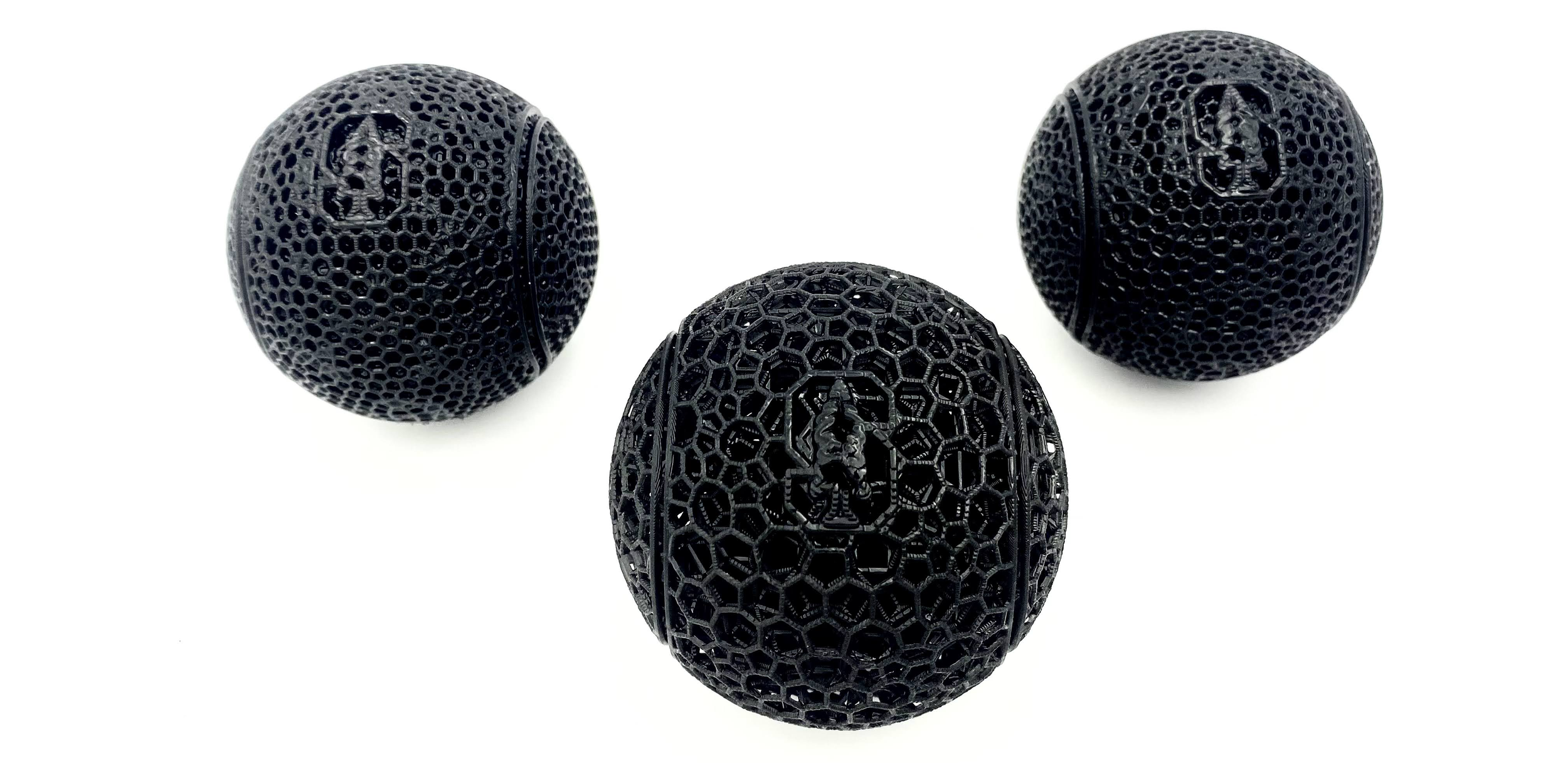
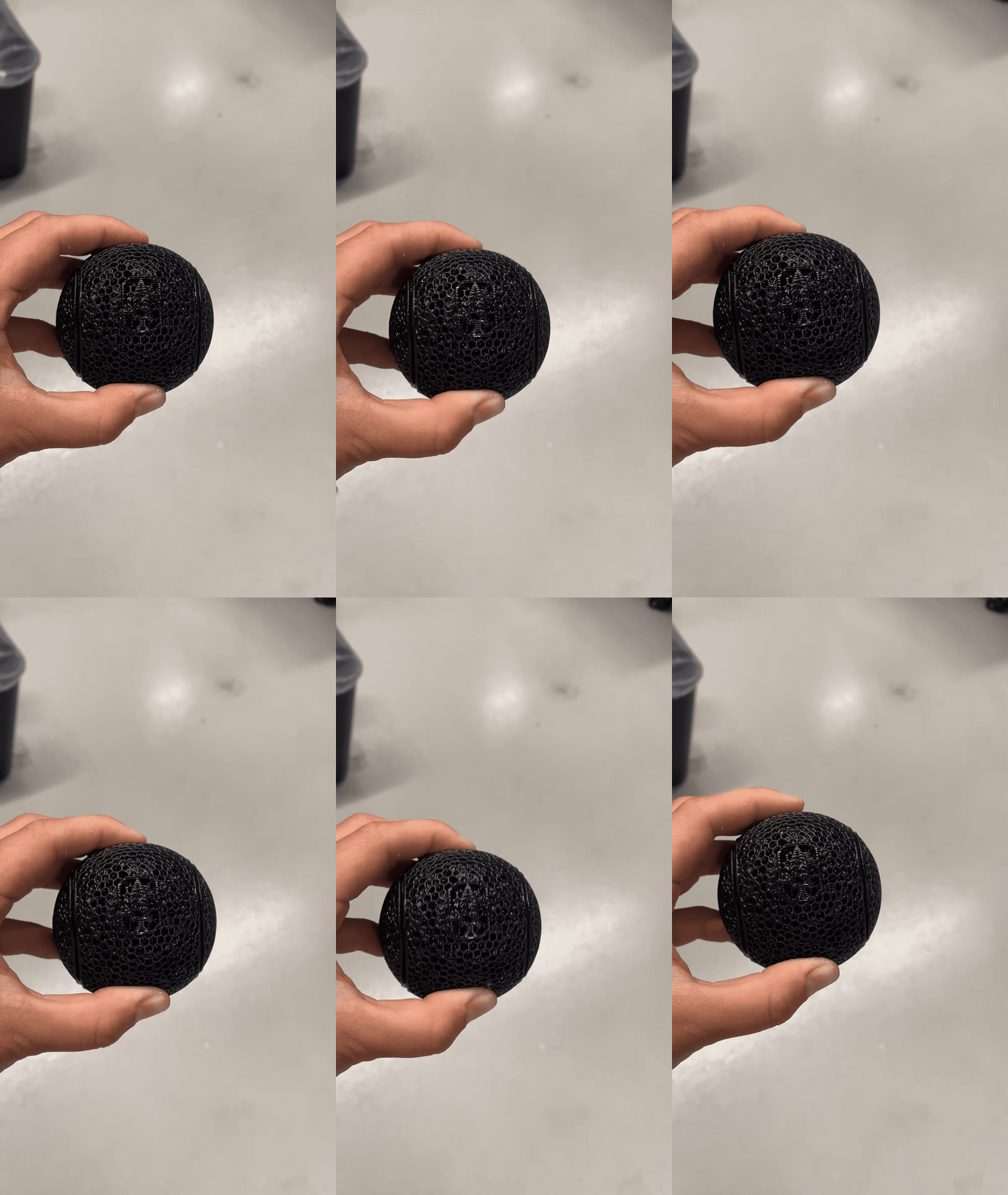
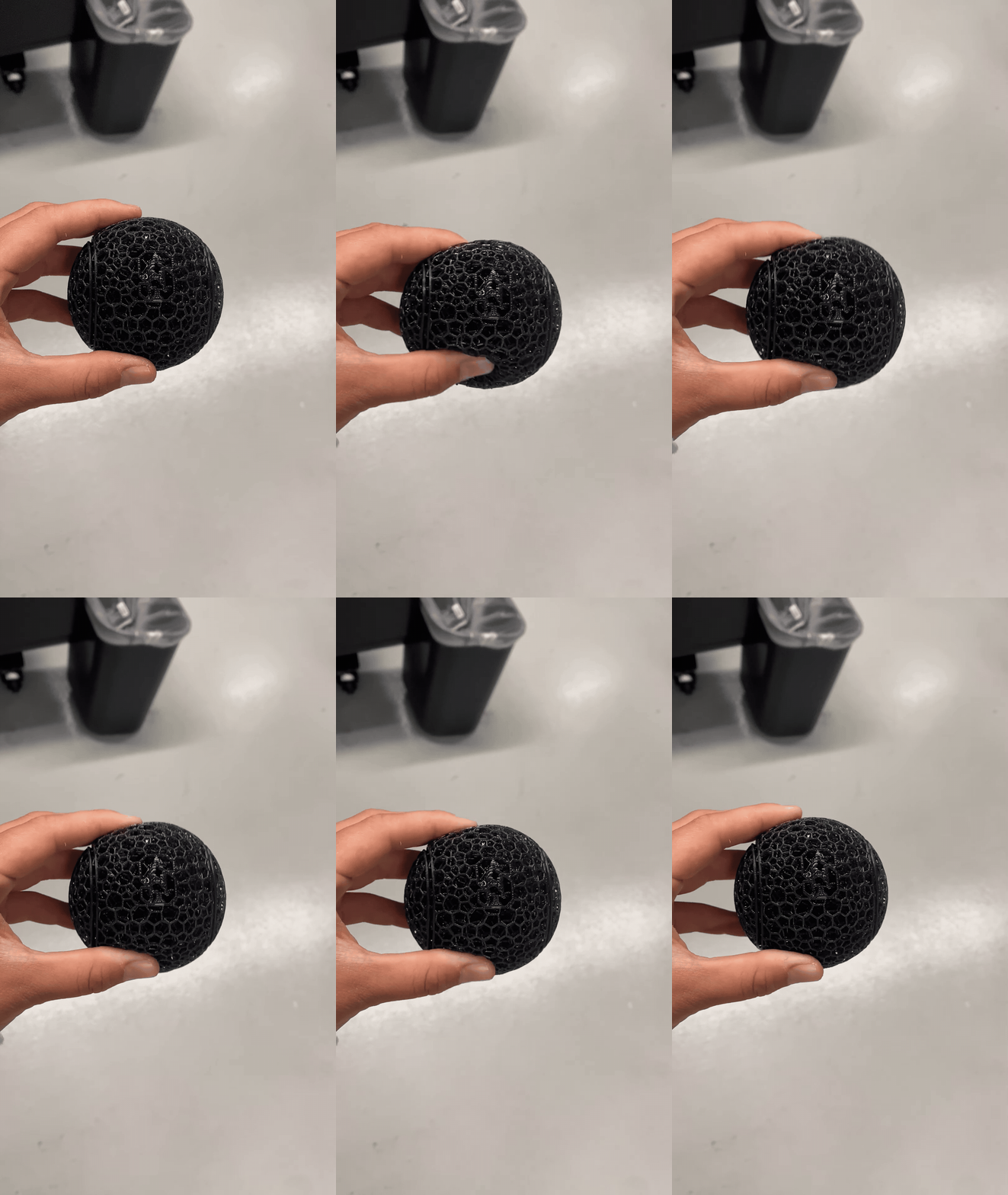
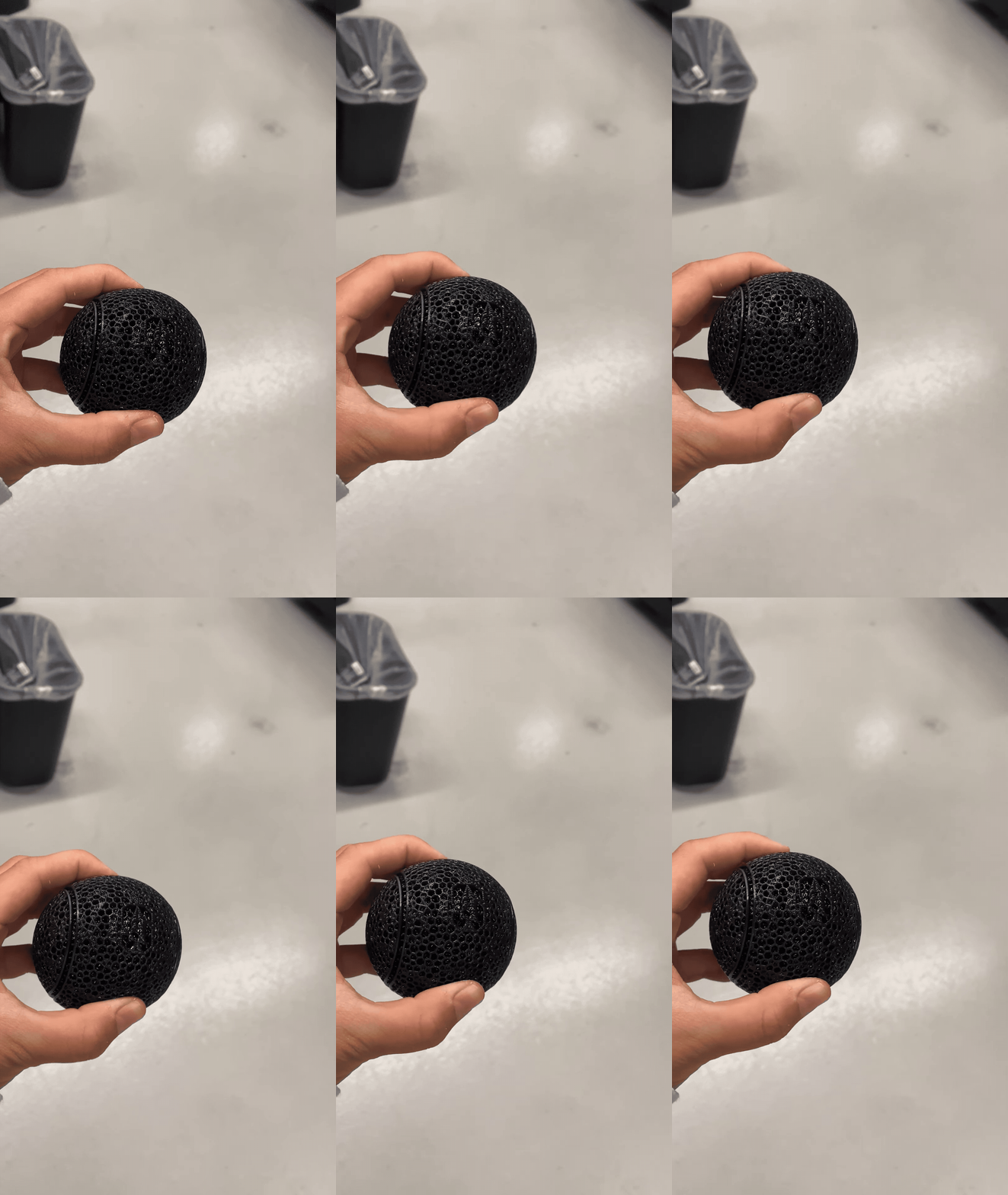
An airless tennis ball that never goes flat, improving the environmental sustainability and affordability of the sport.
Course
ME127: Additive Manufacturing
Timeframe
2 weeks [Junior Year]
Skills
Lattice Carbon 3D printing, Finite Element Analysis
Environmental Impact of Tennis
Tennis is a disposable sport. Players must frequently replace grips, restring rackets, and purchase new equipment—but the most damaging and wasteful element of all is the tennis ball.
Tennis balls are made from a rubber core and a felt exterior composed of wool and nylon. Rubber harvesting threatens forests and biodiversity, while nylon is a petroleum-based plastic. Once manufactured, the balls are packaged in thick plastic or aluminum containers with metal lids and plastic caps. Manufacturers often rely on virgin or non-recyclable plastics, as recyclable alternatives allow air to leak through their pores. After production and packaging, the balls are shipped worldwide, resulting in approximately 1.2 pounds of carbon emissions per ball [source].
Lifespan of Tennis Balls
Despite this resource-intensive process, tennis balls have an extremely short usable lifespan. In professional matches, balls are replaced every seven to nine games—roughly every thirty minutes—because their playing characteristics degrade so dramatically. For amateur and competitive players, balls are typically discarded after a session lasting 1 to 2 hours. In the United States alone, an estimated 125 million tennis balls are thrown into landfills each year [source].
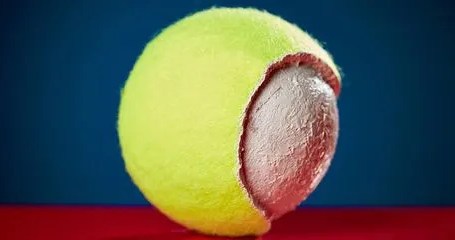
Tennis balls become unusable for two primary reasons: loss of internal air pressure and wear of the felt. As the felt degrades, the ball loses its “fluffiness,” reducing aerodynamic drag and causing it to travel faster through the air—a phenomenon studied by the NASA AMES Research Center [source].
To players, a worn ball feels dense and difficult to control. It strains the wrist, reduces the ability to apply spin, and produces flatter, harsher shots. These drastic changes in performance are why professionals change balls so frequently and why recreational players often discard them so quickly.
My Goal
I set out to create an airless tennis ball that never loses pressure and addresses the rapid wear of traditional felt. This extends its usable lifespan, reducing waste and the need to manufacture so many in the first place. Additionally, a longer-lasting ball reduces the number of balls players need to purchase, lowering the financial barrier to entry of a traditionally exclusive sport.