SMesh: Smoke Sensors
SMesh is a joint project between the Stanford Woods Institute of the Environment and Stanford Radio club that aims to promote responsible use of prescribed burns as a wildfire mitigation strategy. We do this by building a radio mesh of sensors to monitor smoke exposure during prescribed burns and protect communities from the pollutants generated.
Club
Stanford Radio Club & Stanford Woods Institute for the Environment
Timeframe
June 2025-June 2026
Skills
CAD, 3D Printing, radio mesh networking, I2C sensor integration
Background
Prescribed fire, the controlled application of fire to landscapes to remove built-up fuels and improve ecosystem health, is a critical tool in the fight to reduce the risk of catastrophic wildfires in California. The state aims to scale up the use of beneficial fire to over 1 million acres annually by 2045. With the expanded use of prescribed fire as a wildfire management strategy in the US and around the world, there is an urgent need for improved tools to monitor, measure, and mitigate smoke impacts on communities.
SMesh arose as a collaboration between the Stanford Radio Club and the Stanford Woods Institute for the Environment’s Climate and Energy Policy Program when research scientist, Jessica Yu, noticed a lack of affordable, deployable smoke sensors for monitoring prescribed burns in pilot studies at Jasper Ridge Biological Preserve 'Ootchamin 'Ooyakma. Funded by Stanford’s Office of Community Engagement, she tested low-cost options like Purple Air, Air Gradient, and Atmotube and found that although these options provide some data, they lack reliability and robustness in field conditions. Current solutions fall into two categories: regulatory-grade monitors costing $15,000-$40,000 that require permanent installation and AC power, and consumer sensors ($200-$300) designed for home WiFi networks that fail in remote field conditions due to connectivity dependencies, insufficient battery life, and lack of weather durability.
By making reliable smoke monitoring deployable anywhere prescribed fire burns, SMesh helps land managers burn more, burn smarter, and build the public trust that scaling good fire demands.
Mission
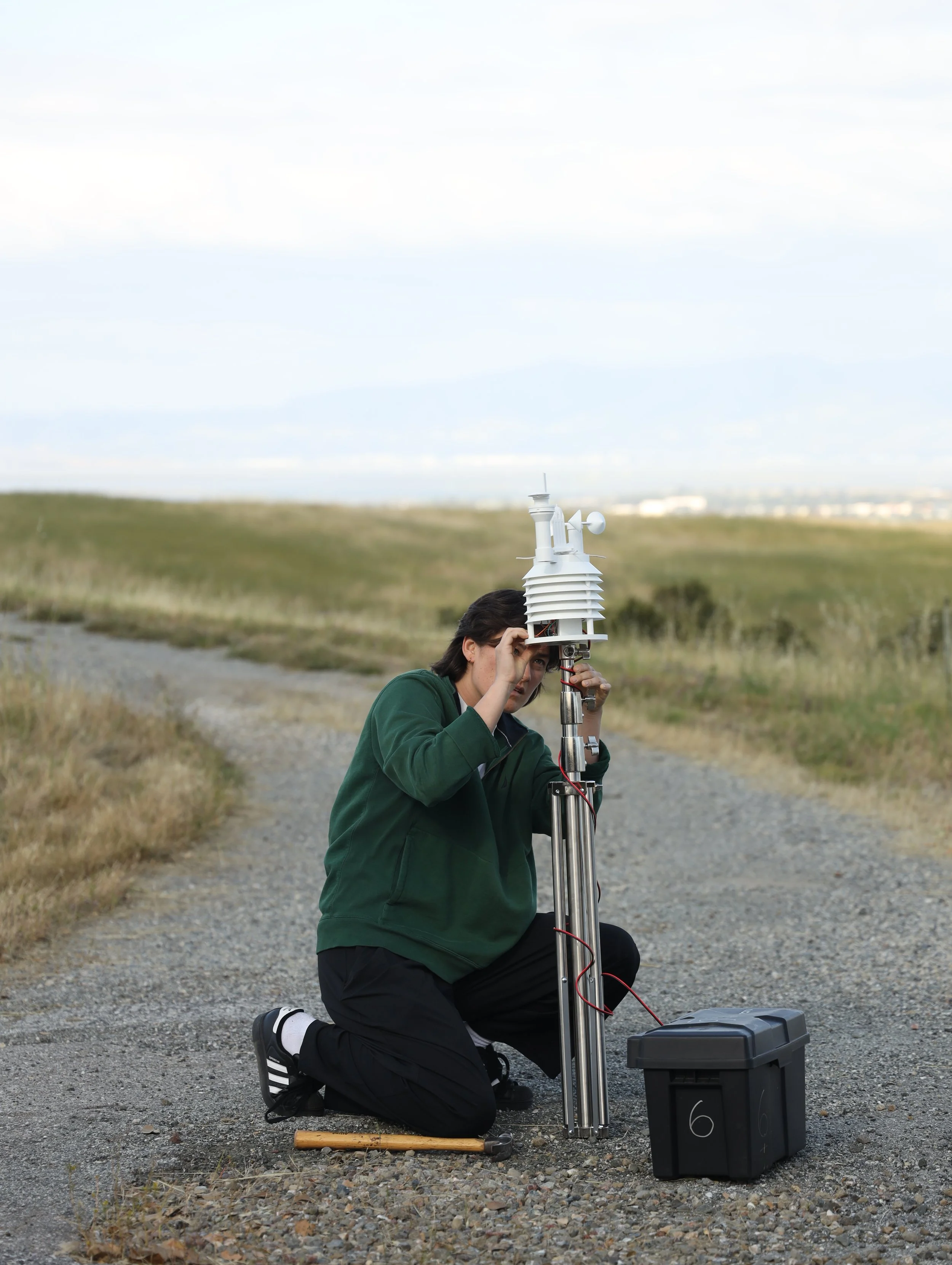
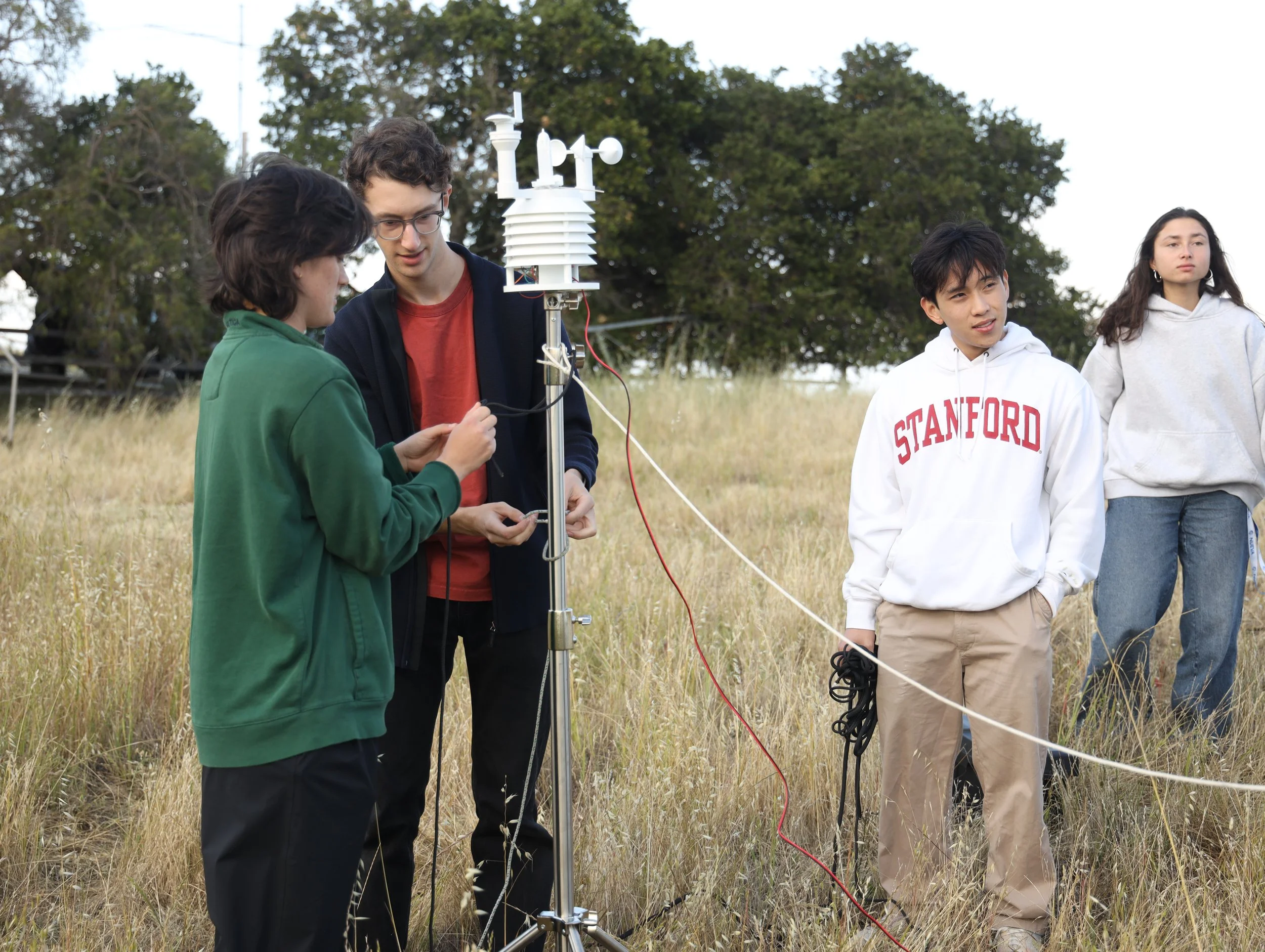
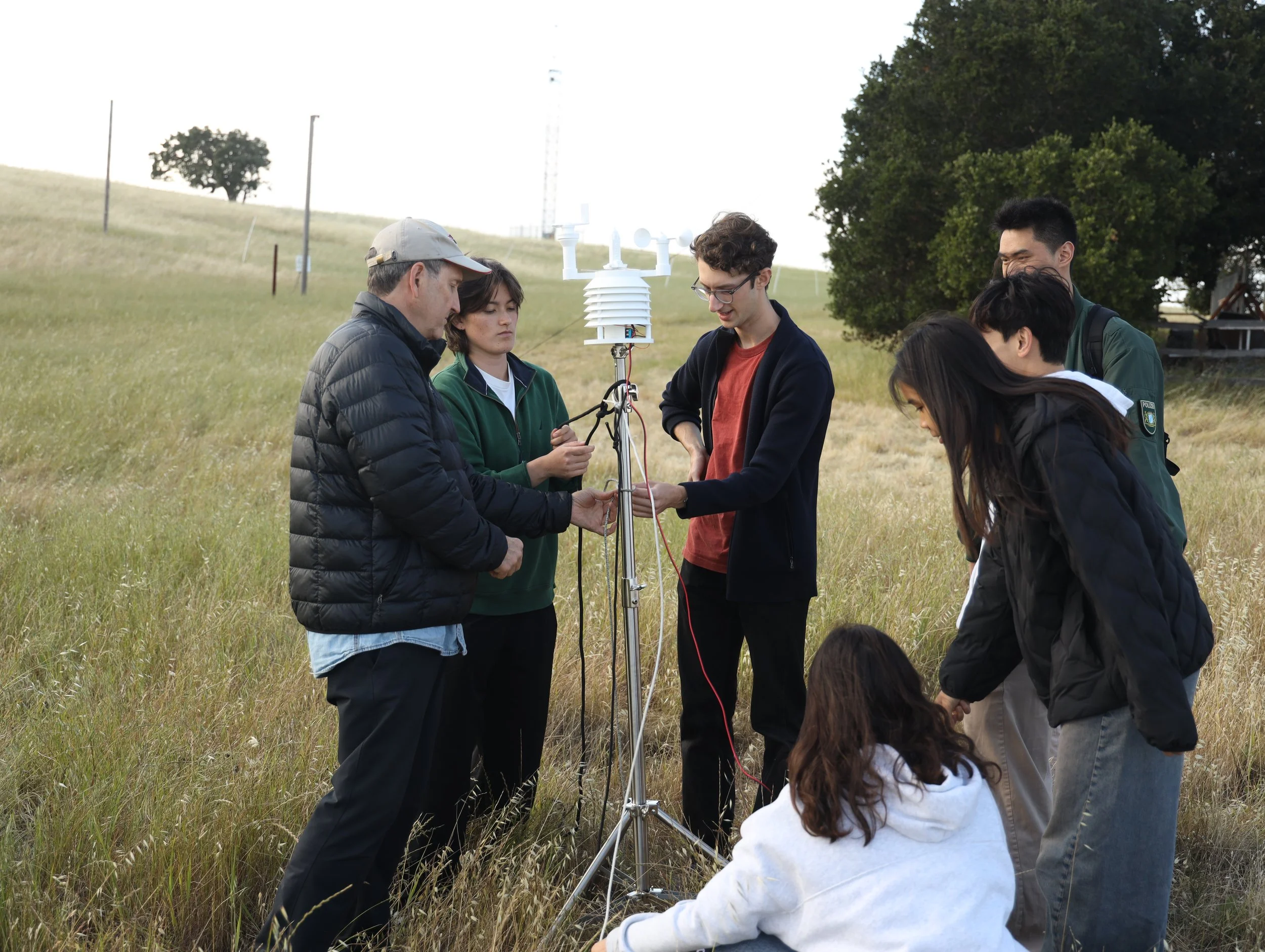
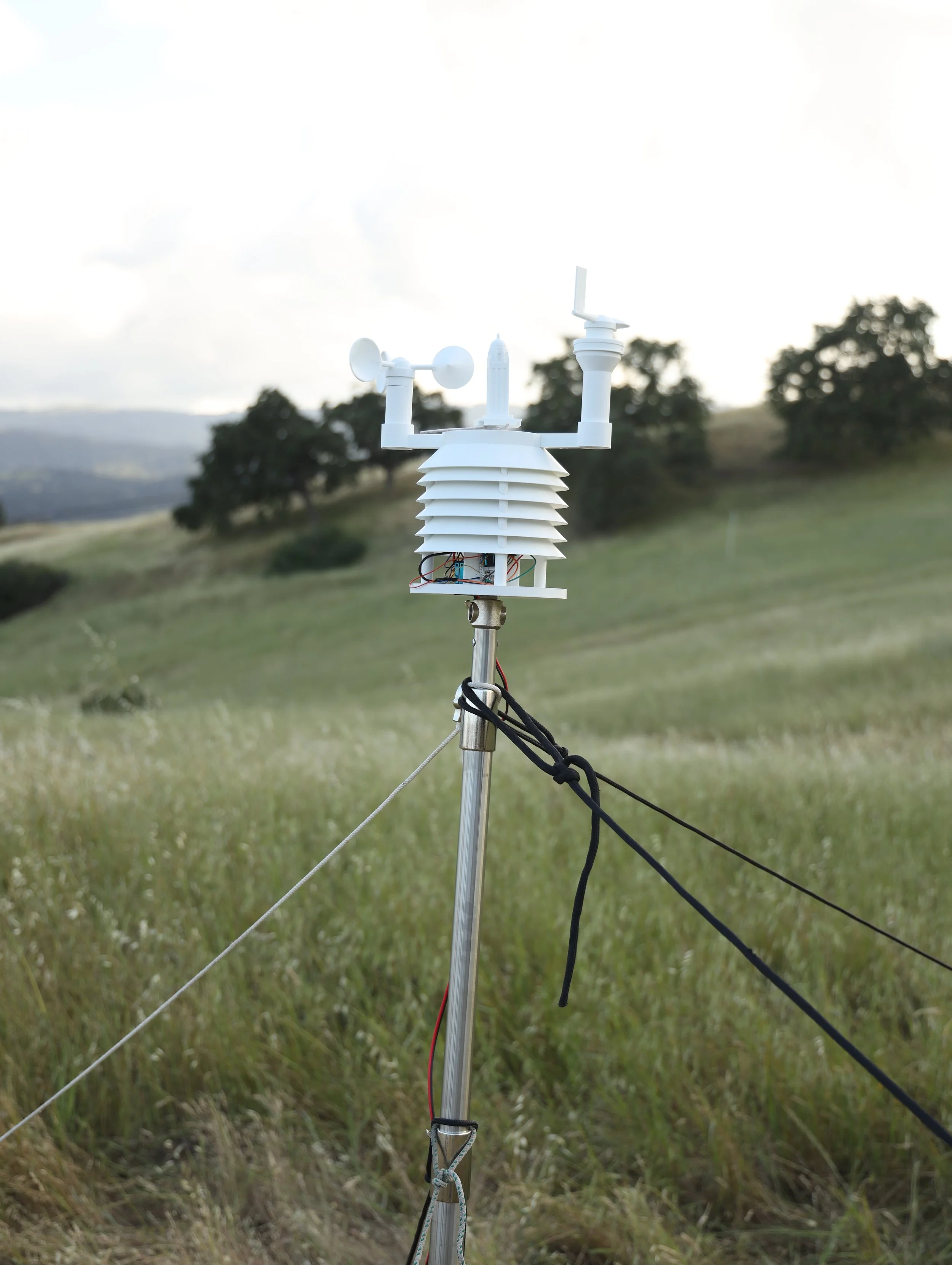
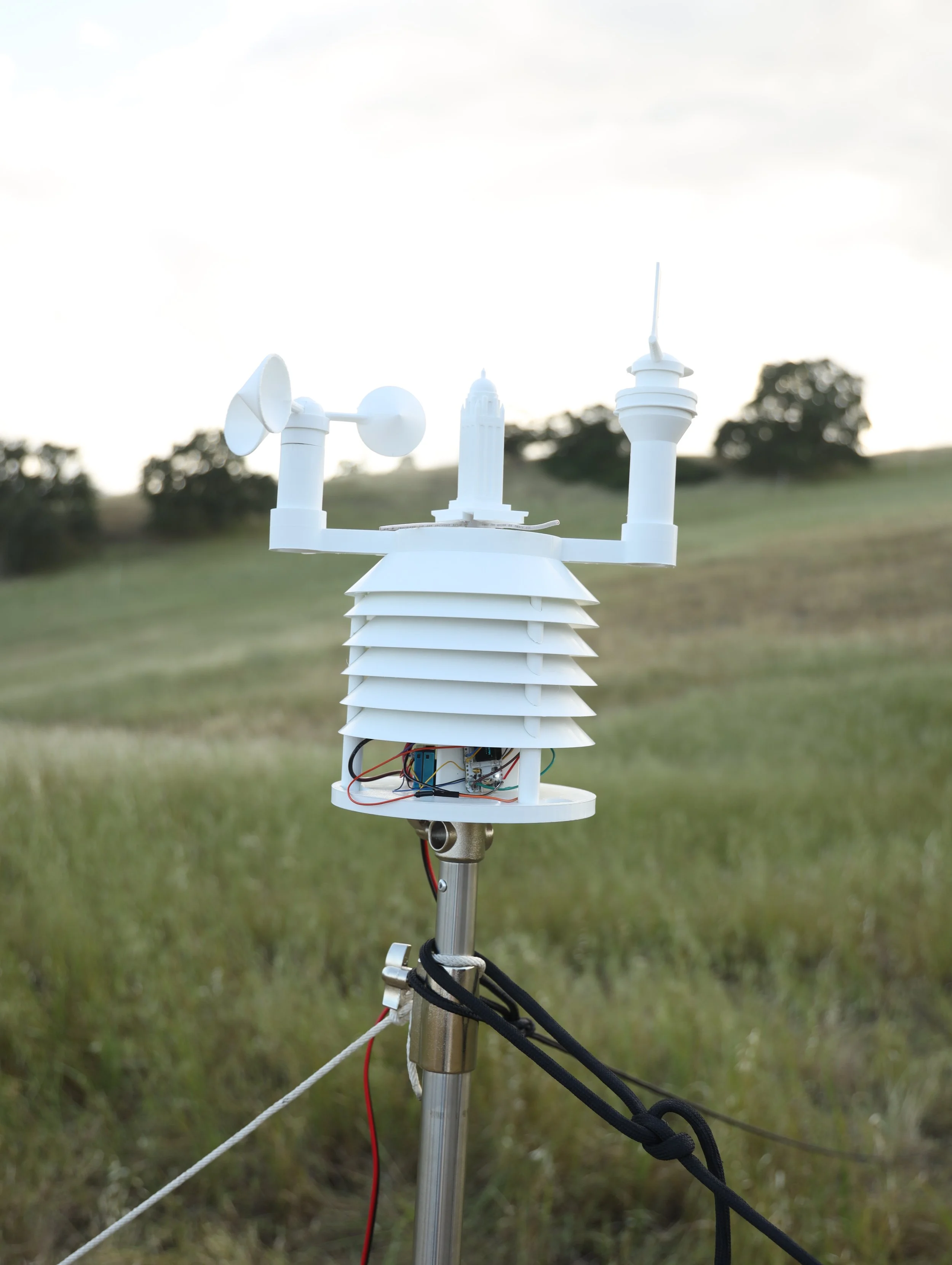
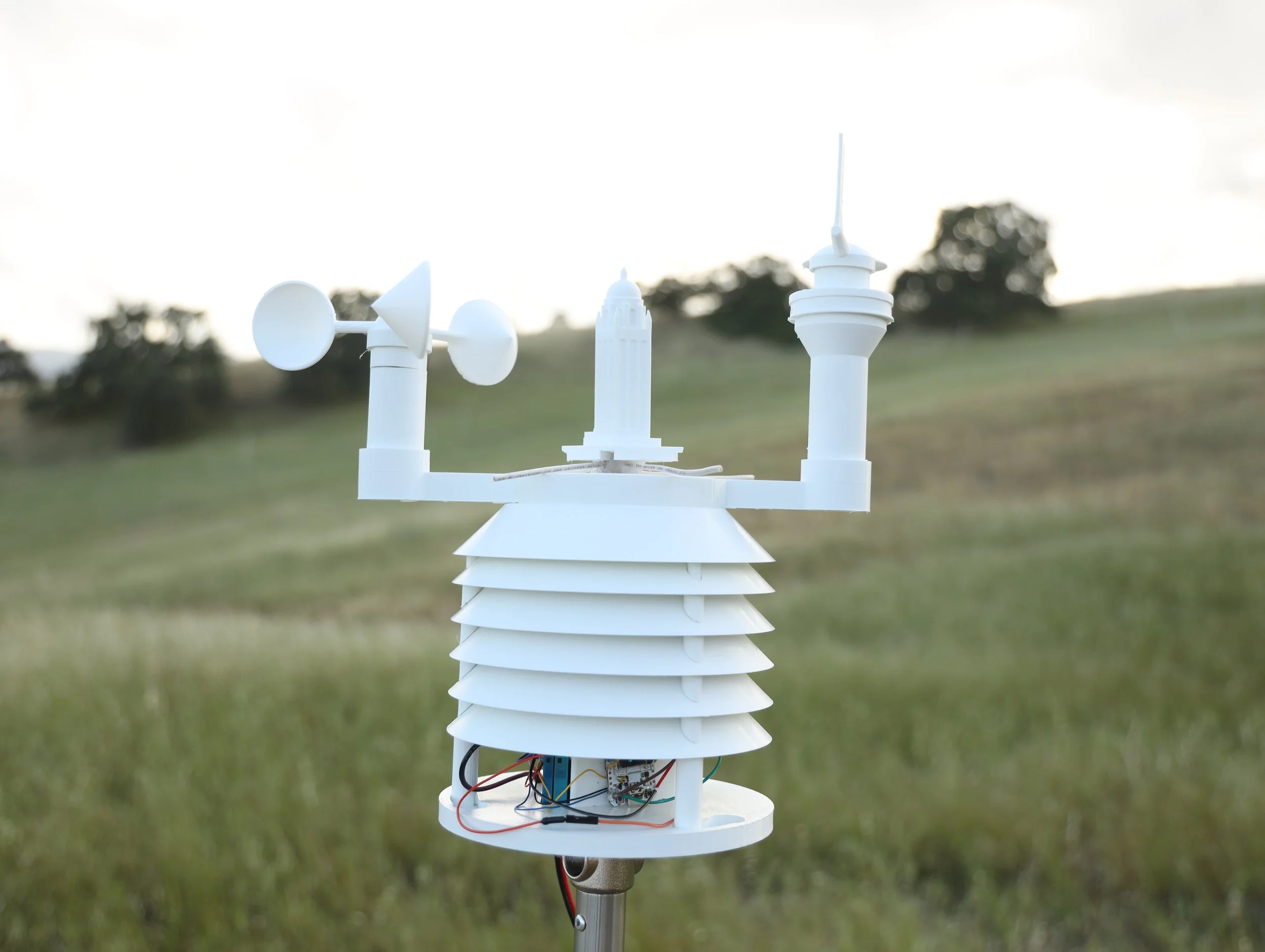
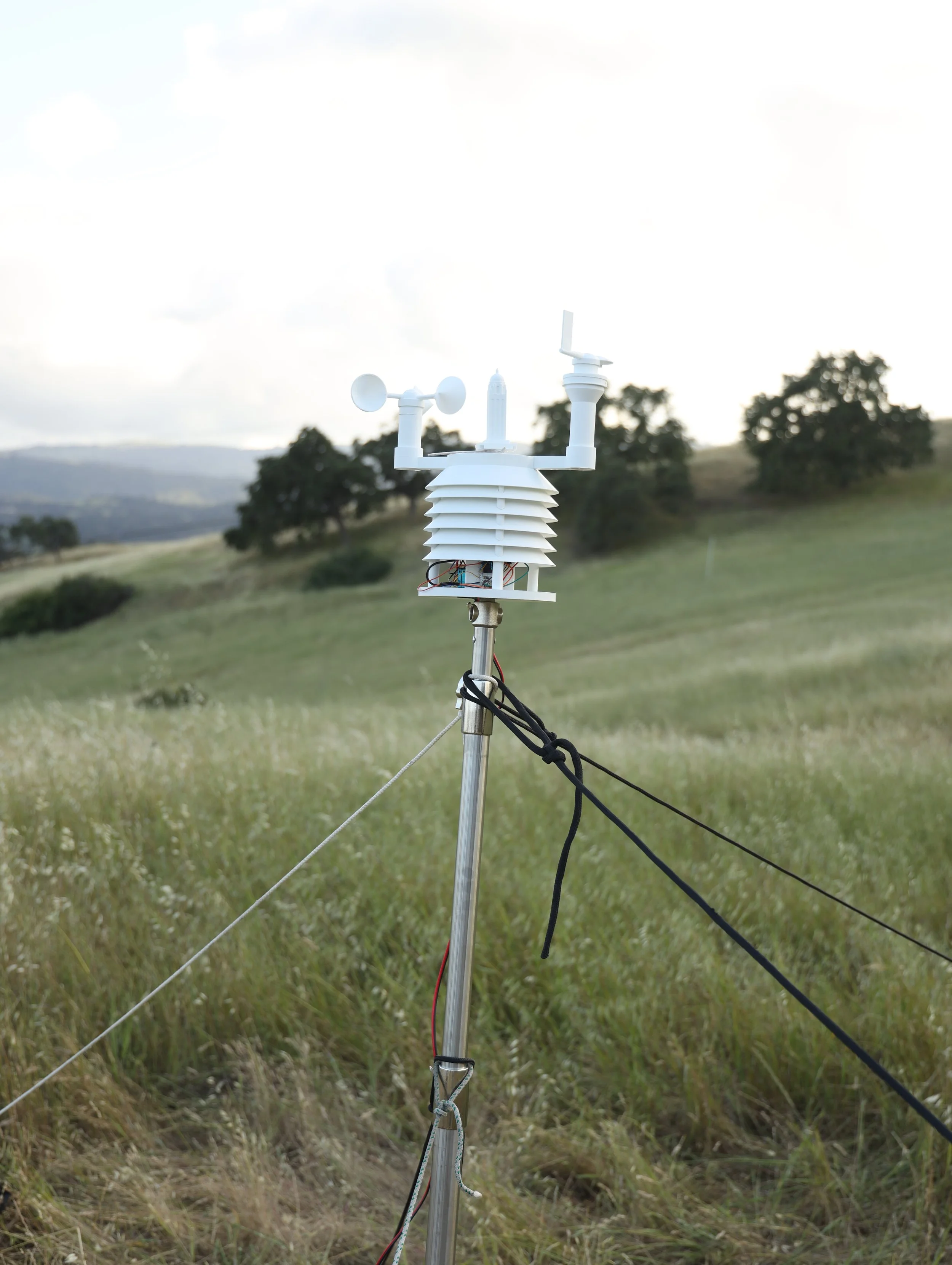
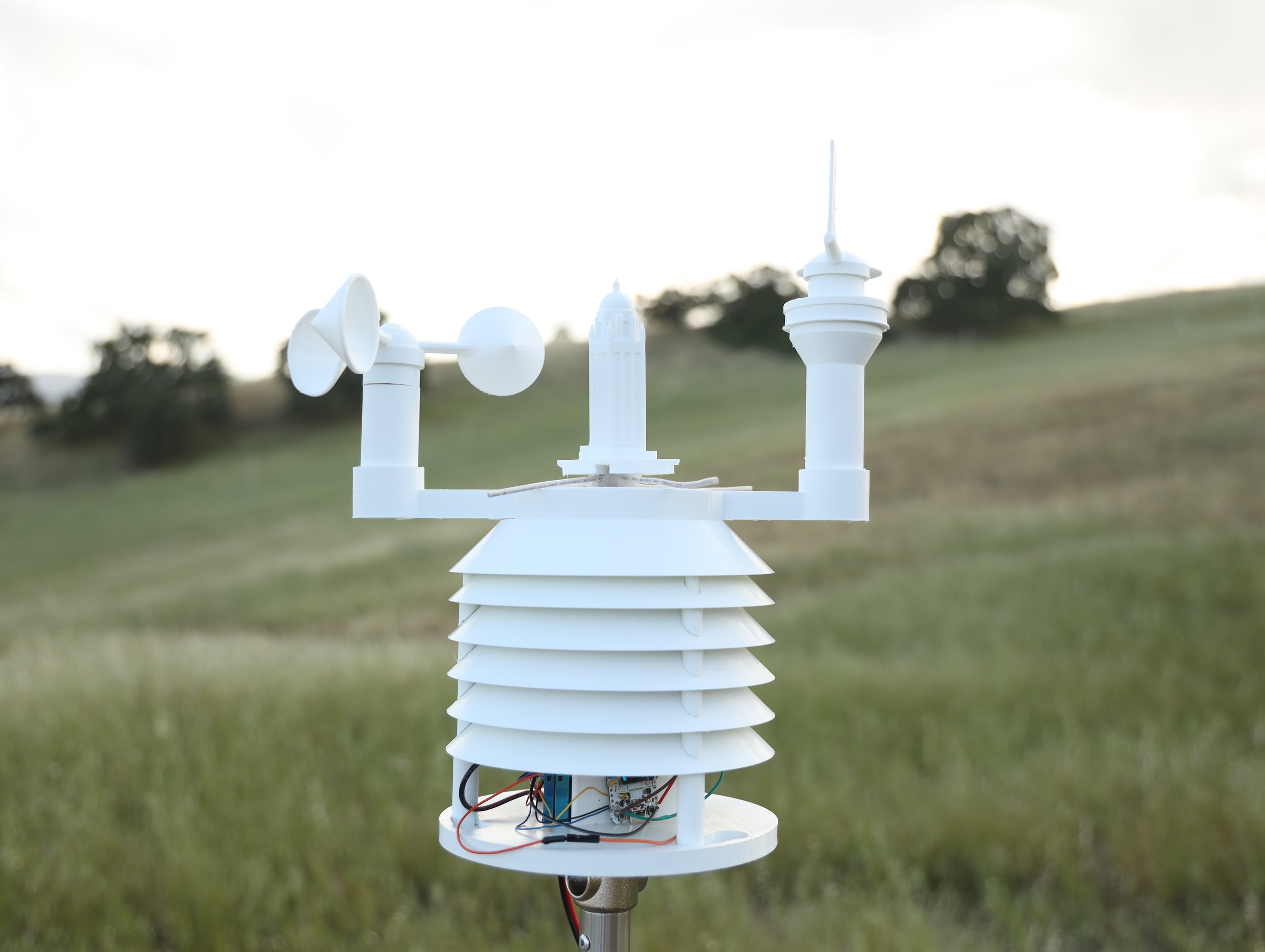
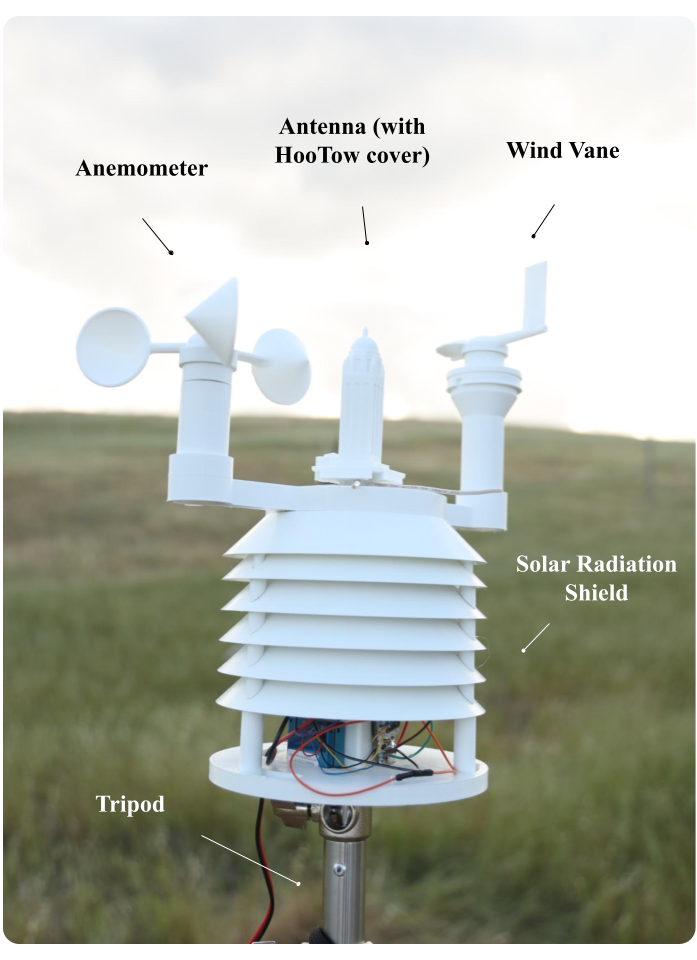
SMesh aims to create an affordable, buildable, deployable sensor for use when researching prescribed burns. The SNodes (also referred to as sensors) collect data on temperature, humidity, pressure, particulate matter, wind speed, and wind direction. They utilize a radiation shield to block direct and reflected solar radiation.
The sensors communicate using a mesh network. This network accumulates data at one destination node referred to as the “logger.”
SMesh could help researchers correlate the behavior of a prescribed burn over time with local weather patterns. Example research questions might be: How can local wind patterns predict the spread of smoke over a larger area? At what point in a burn is there greatest risk to the air quality of surrounding areas? How do ground measurements of air quality correlate to the spread of smoke over a larger area? In short: How can sensors near a fire predict effects far from it?
SMesh Network Breakdown
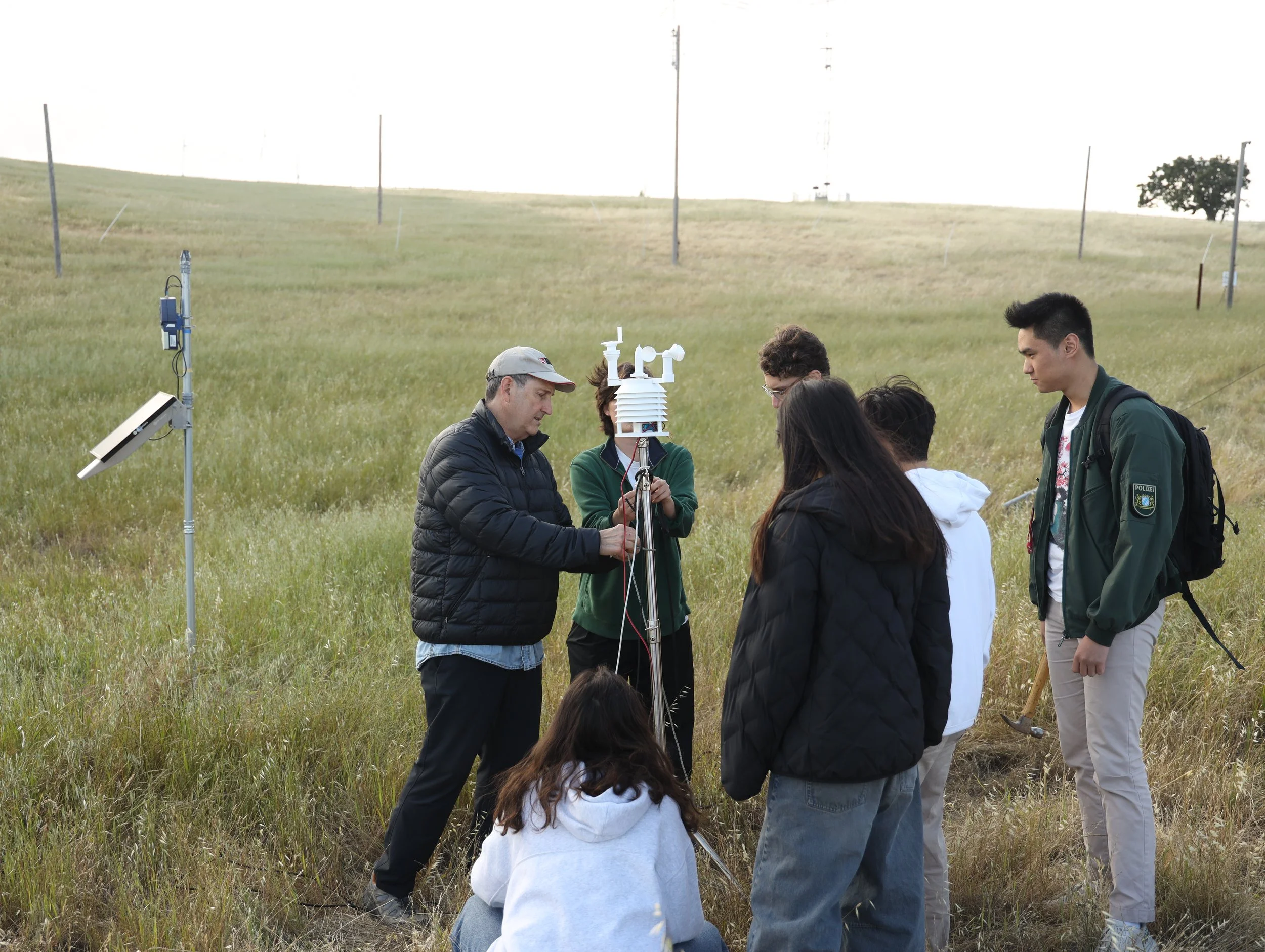
SMesh is a network of SNodes—a physical unit housing sensors that measure smoke concentration, temperature, humidity, wind speed, and wind direction. Together, these variables allow researchers to correlate smoke concentration and movement with weather conditions.
Data is transmitted wirelessly between SNodes using Heltec LoRa radio modules running Meshtastic firmware, which organizes the nodes into a mesh network. Rather than each SNode communicating directly with a central station, packets hop between neighboring SNodes until they reach a specially designed logger node, where readings are stored on a micro-SD card for analysis. This relay architecture extends effective range far beyond what any single radio link could achieve.
This mesh radio network is particularly valuable in remote areas where wildfire research takes place. The network requires no cellular infrastructure nor WiFi, runs on low power for extended deployments, and self-heals if any node fails. The result is continuous, reliable data collection from environments that would otherwise be inaccessible. In the case where local wifi/ethernet/cellular connection/hotspot is available, we can stream real-time data into a Google Drive folder.
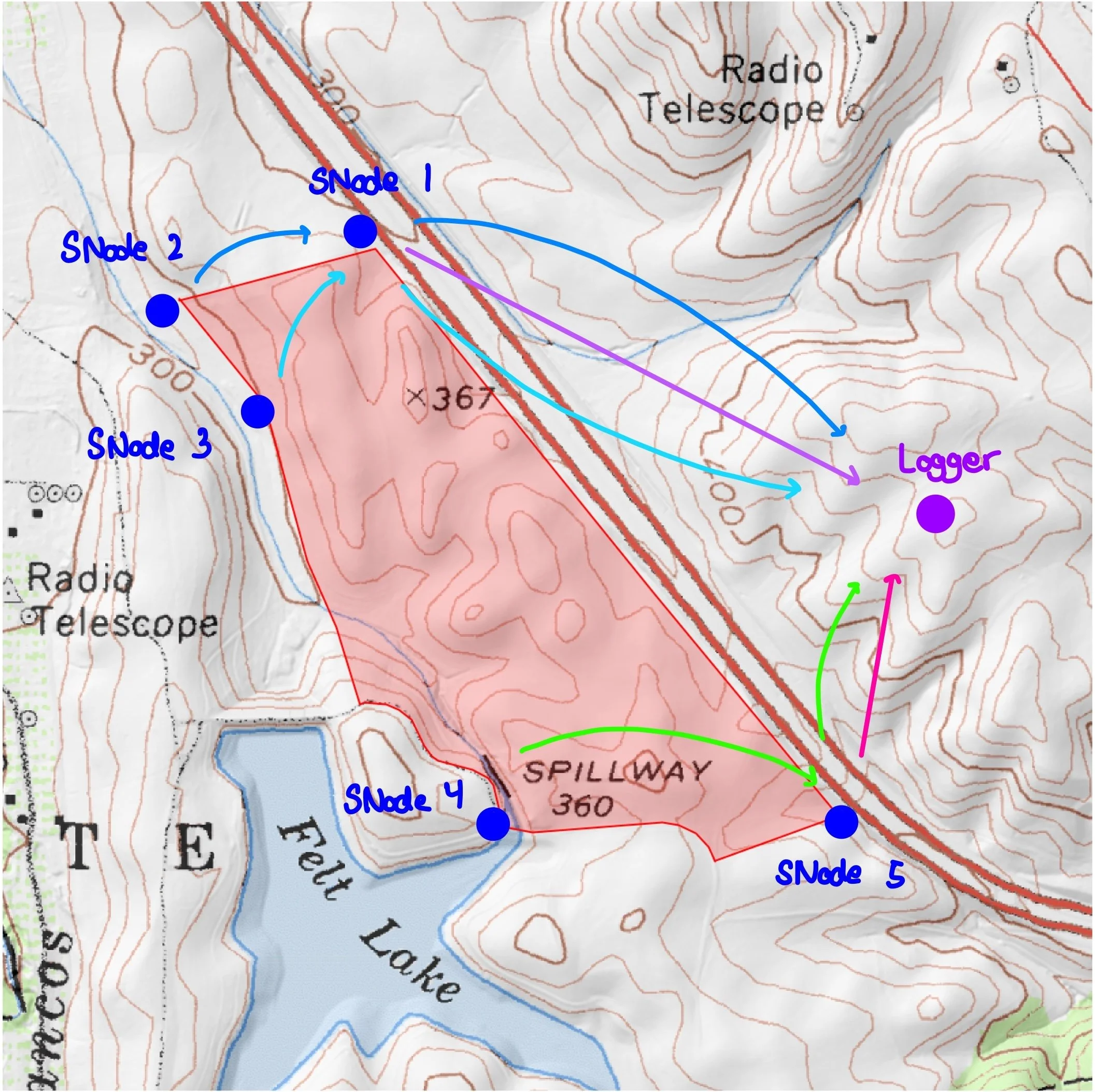
The diagrams below illustrate the data flow within both hopping and star network configurations.
Scenario 1: Hopping
SNode 1 is close enough to the logger to transmit its data directly without any intermediate hops.
SNode 2 is too far from the logger, so it broadcasts its message out in all directions. Both SNode 1 and SNode 3 receive the signal. SNode 1 is further and receives a weak signal, while SNode 3 is closer and receives a stronger one. To maximize the distance of the “hop”, the protocol prioritizes the weaker signal. SNode 3 hears SNode 1 rebroadcast the packet while its own delay timer is still counting down. Consequently, SNode 3 cancels its transmission to prevent network clutter, allowing SNode 1 to successfully push the data toward the logger.
SNode 3 is also outside the logger’s range, so it broadcasts its data to the mesh. SNode 1 picks up a weak signal, while SNode 2 picks up a stronger signal. SNode 1 repeats the message first, successfully delivering it to the logger.
SNode 4 can’t send its packet directly to the logger, so it broadcasts its message out. SNodes 1, 2, and 3 are too far to pick it up. SNode 5, however, is within range to hear the broadcast. SNode 5 acts as a relay, capturing SNode 4’s data and passing it along to the logger.
SNode 5 is close enough to the logger to send its packet directly without any intermediate hops.
Scenario 2: Star Network
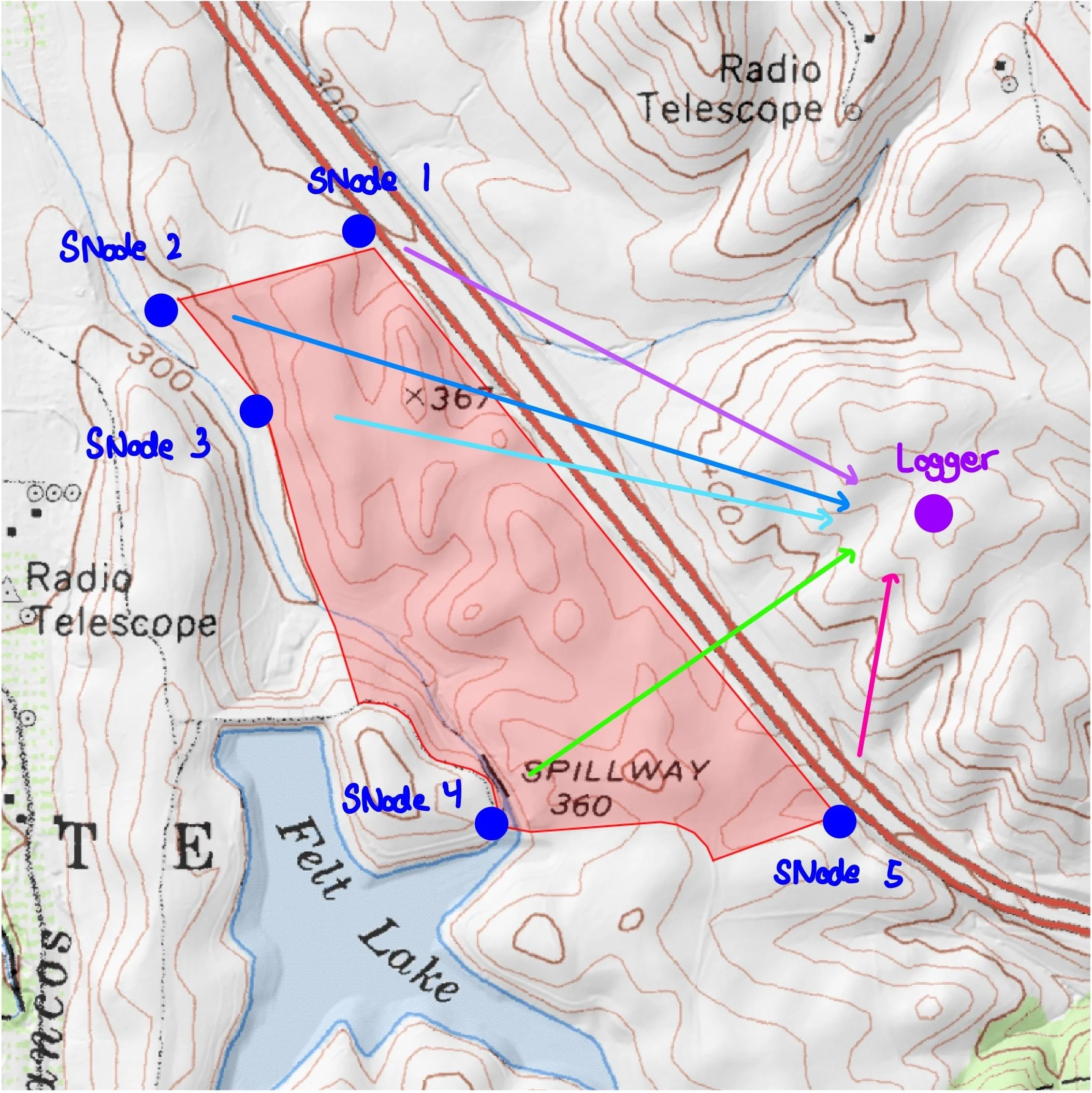
When the logger is in the direct line of sight of all the SNodes and within range, all the SNodes transmit their packets of data directly to the logger.
SNode Breakdown
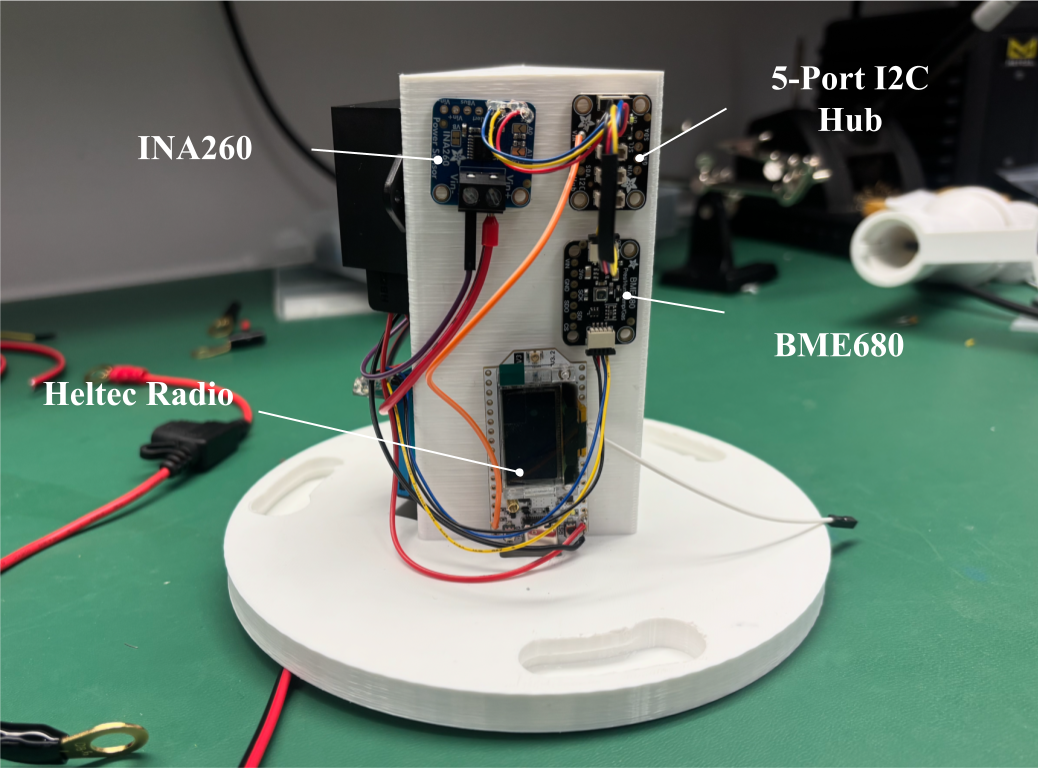
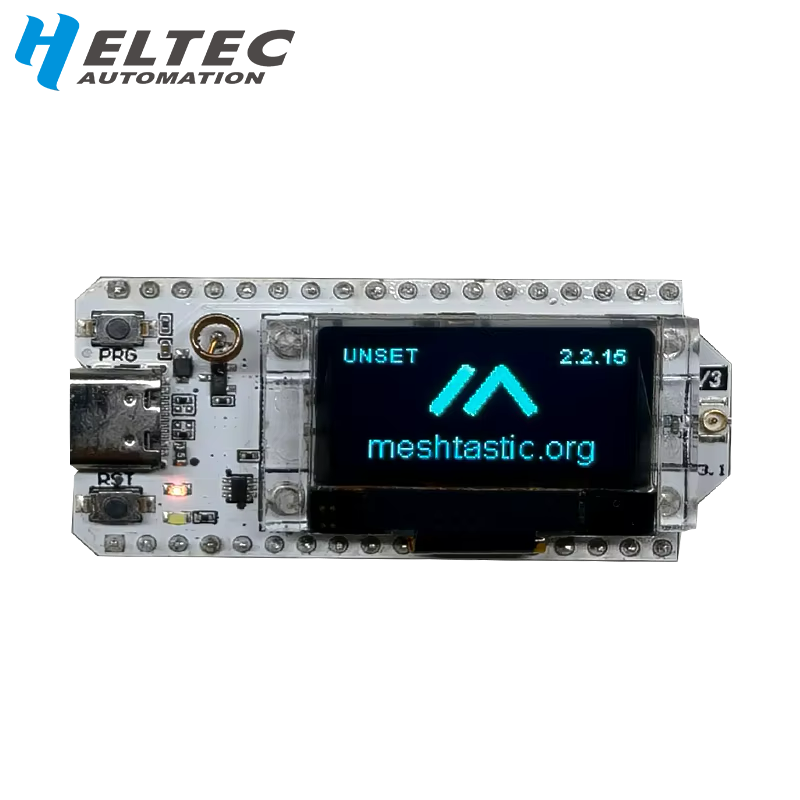
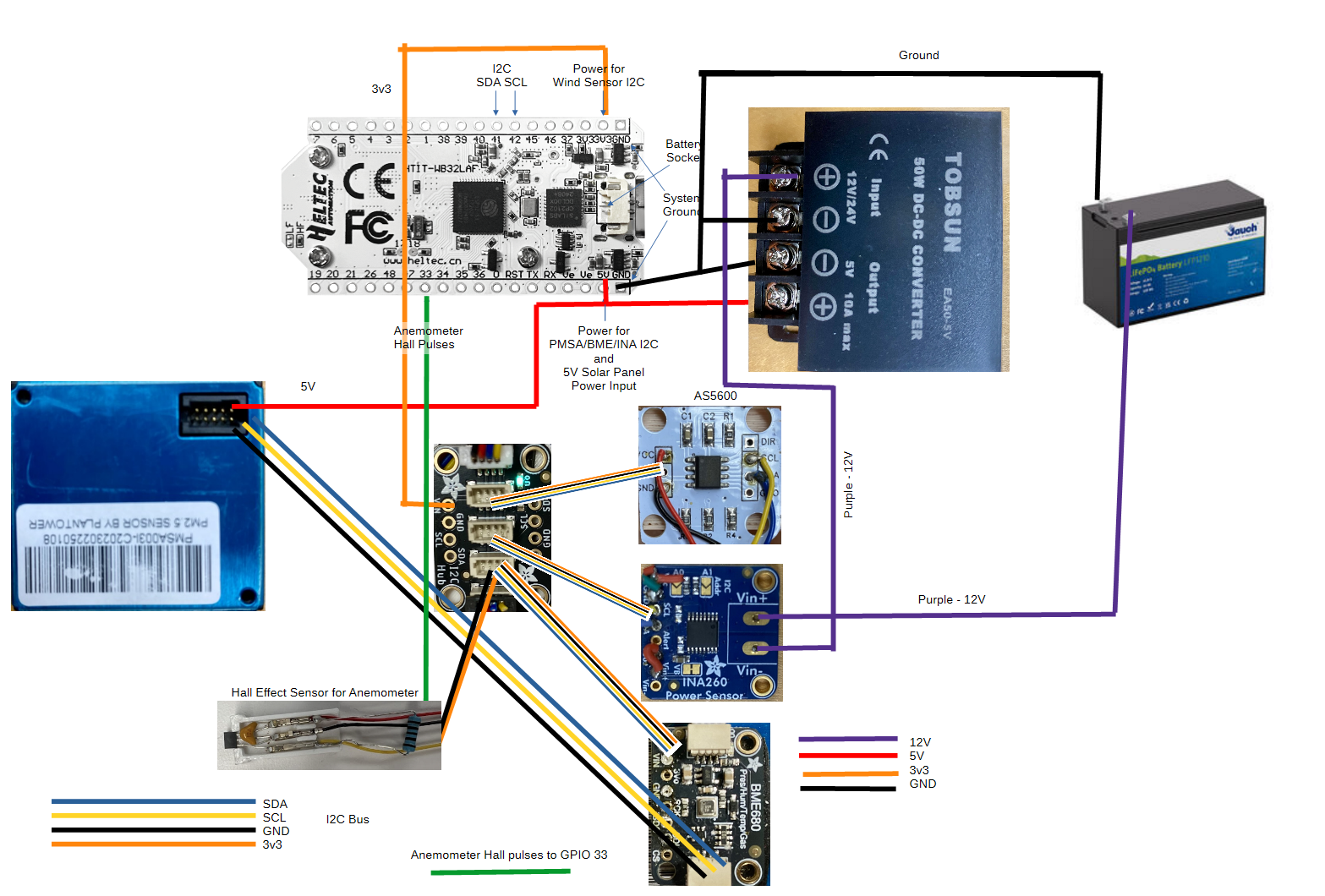
The Heltec WiFi LoRa 32 is a printed circuit board that contains an ESP32S3 microcontroller, GPIO, pins, and an SX1262 LoRa (long-range) radio chip. The microcontroller is programmed to receive data sent from sensors connected to its GPIO pins and prepare them for radio transmission using its radio chip. An antenna is attached to the antenna port of the printed circuit board, which enables it to physically transmit the sensor readings over radio. It runs on an open-source Meshtastic firmware to create a decentralized, off-grid mesh network for long-range data transmission across participating nodes without cellular service or internet.
Particulate Matter Sensor
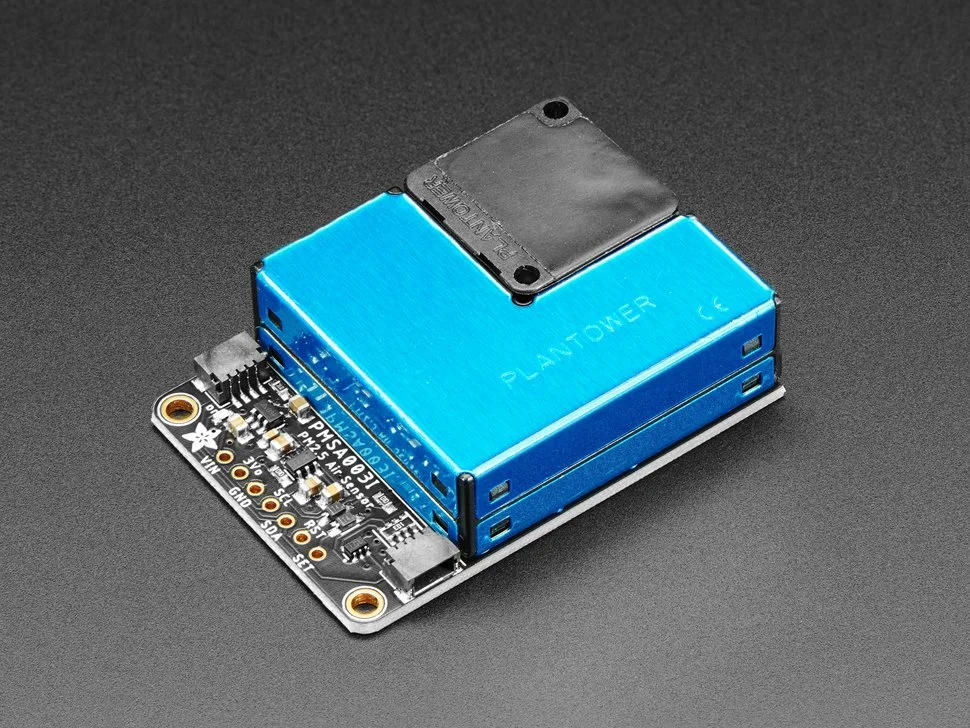
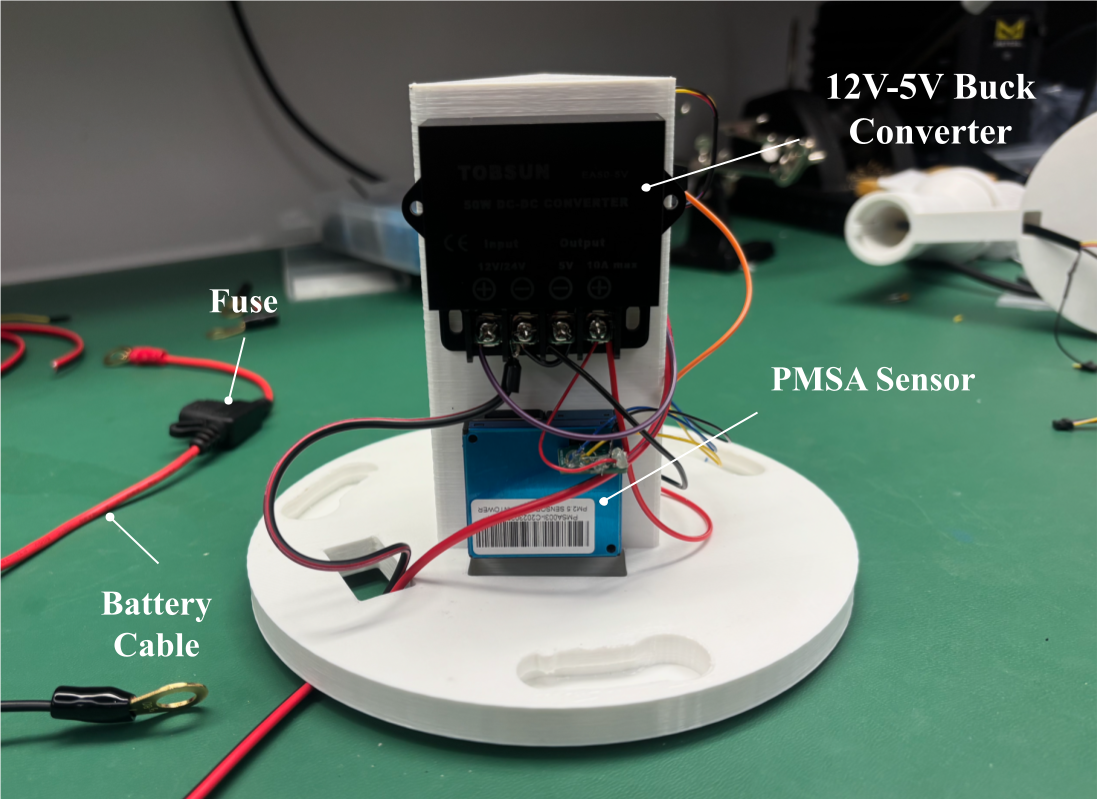
The PMSA0031 is a particulate matter sensor (PM2.5) with an I2C interface that measures concentration of smoke particles in the air. PM2.5 refers to particulate matter smaller than 2.5 micrometers in diameter. The sensor uses an internal fan to draw in air into a sensing chamber and uses laser scattering to quantify the size and count of suspended particles.
BME680/688
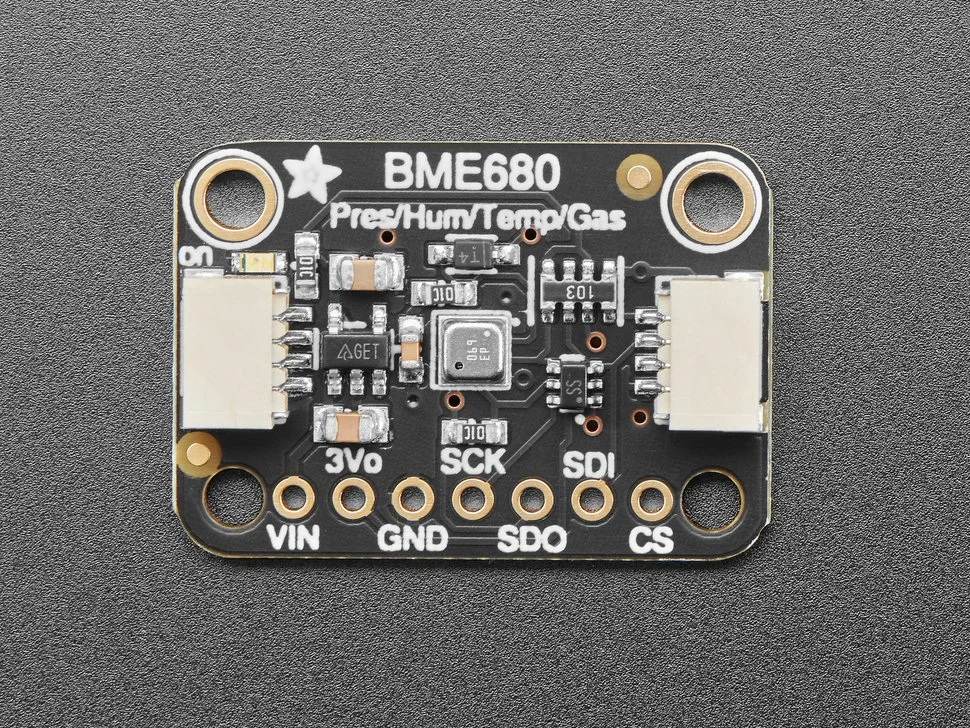
The BME680 is a temperature, humidity, volatile organic compound, and barometric pressure sensor. We use I2C communication protocol to exchange data with the microcontroller in the Heltec. Collecting these environmental metrics allows for researchers to make correlations between temperature, humidity prior to the burn with particulate matter / smoke readings during and after the burn.
INA260
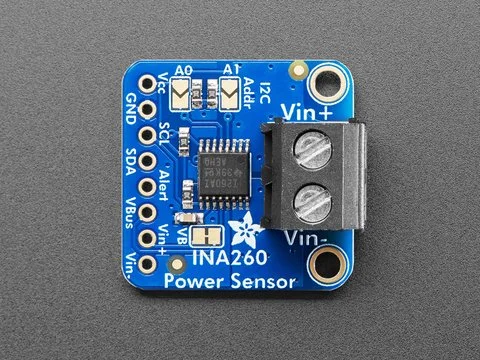
The INA260 is a current and voltage sensor that communicates over I2C. It is used to monitor battery level.
Buck Converter
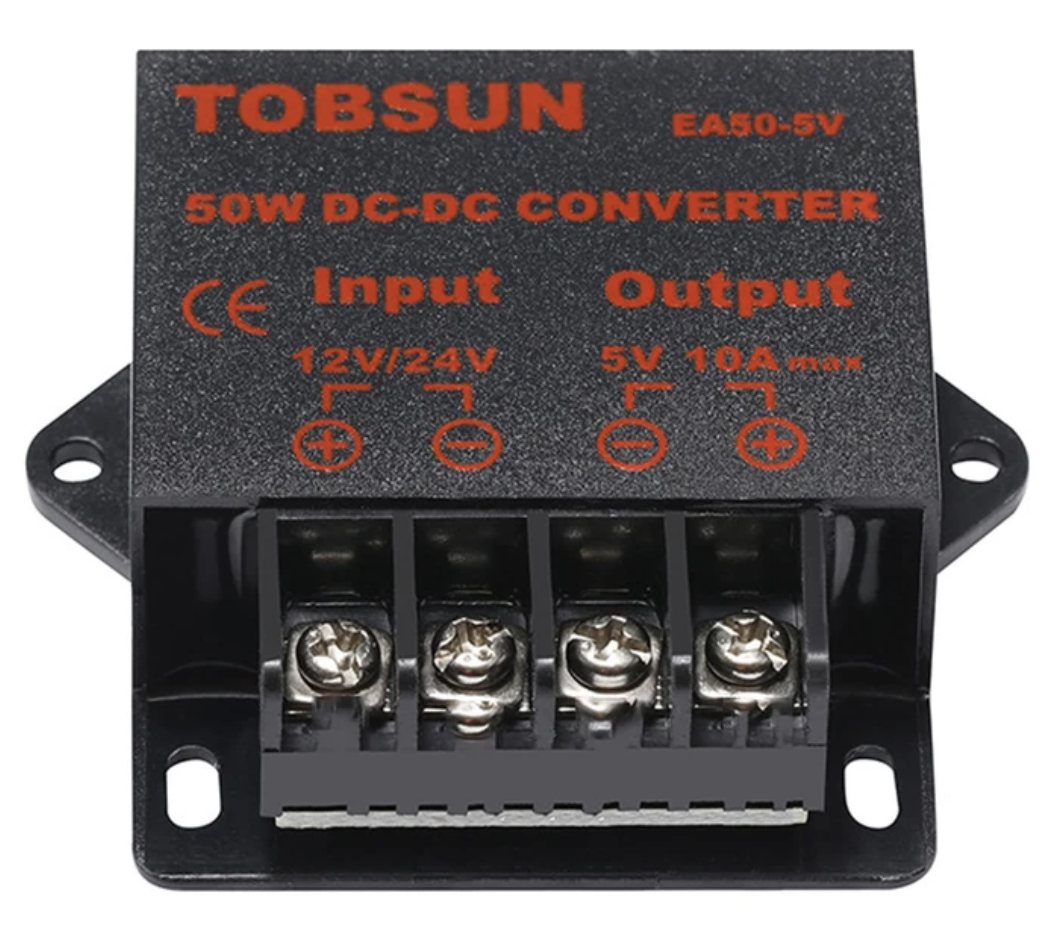
The 12V-5VDC buck converter steps down the 12V battery’s default voltage to the 5V supply voltage that the sensors need.
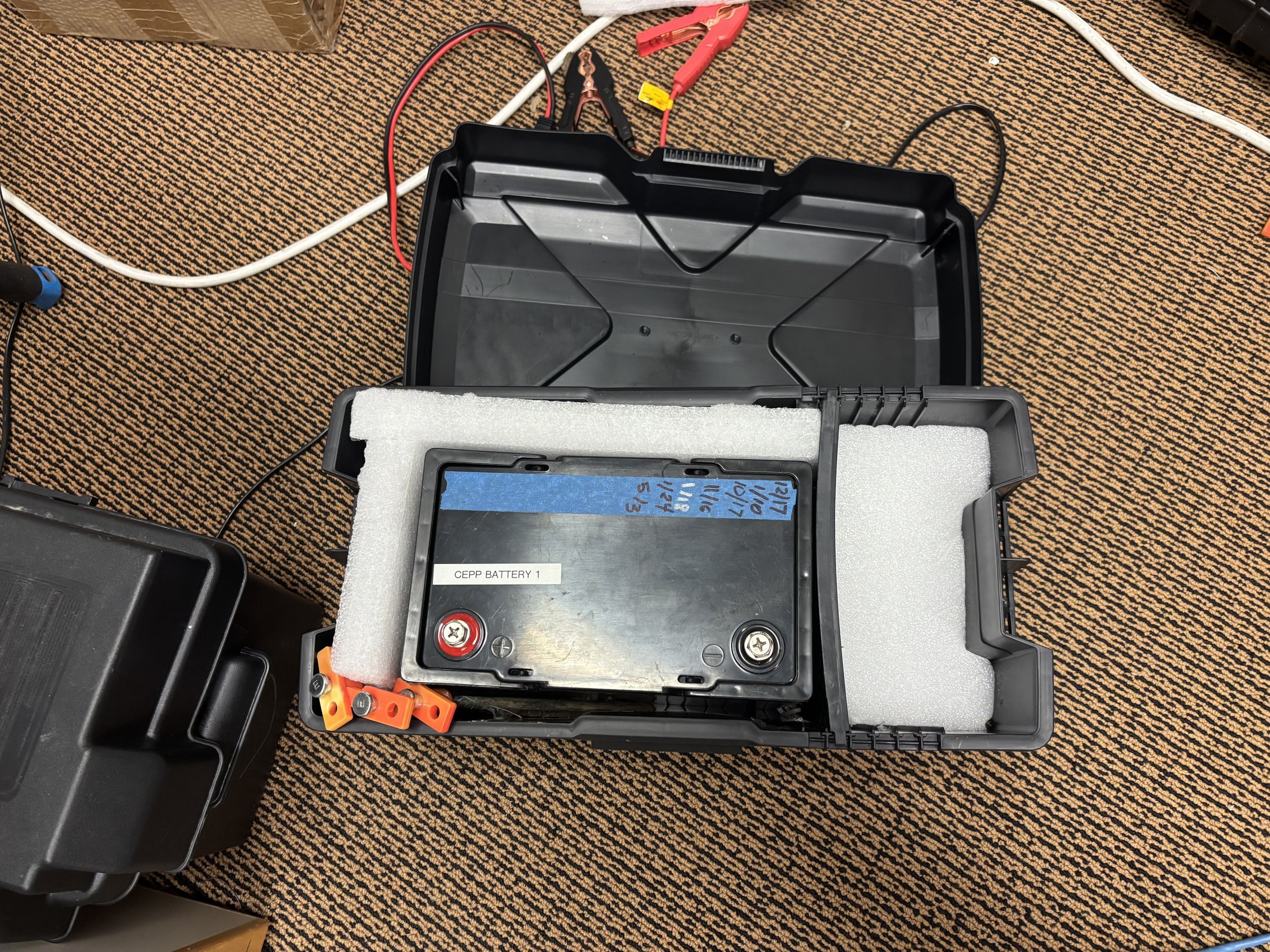
Battery
The 12V-5VDC buck converter steps down the 12V battery’s default voltage to the 5V supply voltage that the sensors need.
Heltec Meshtastic Radio
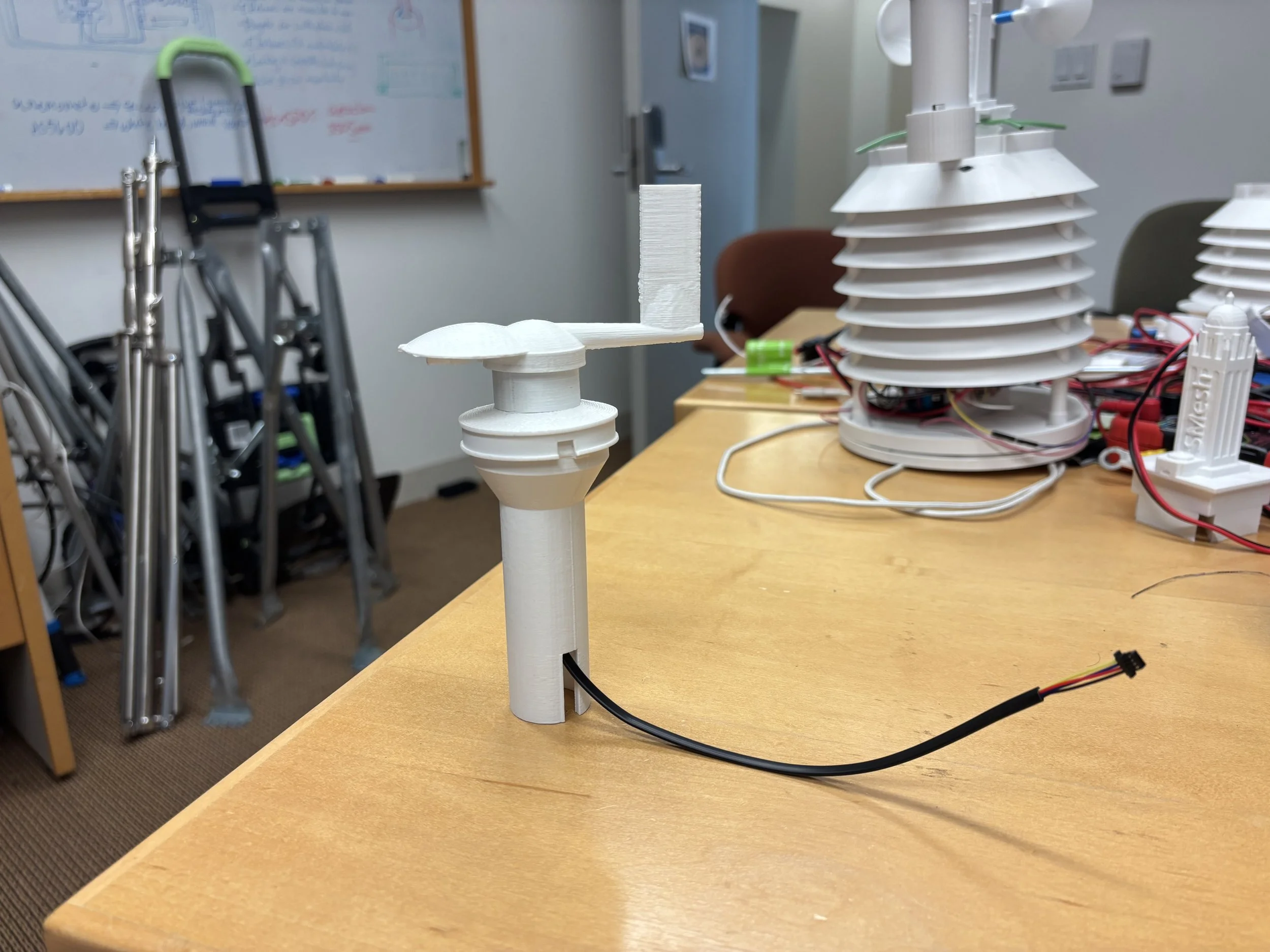
Wind Vane
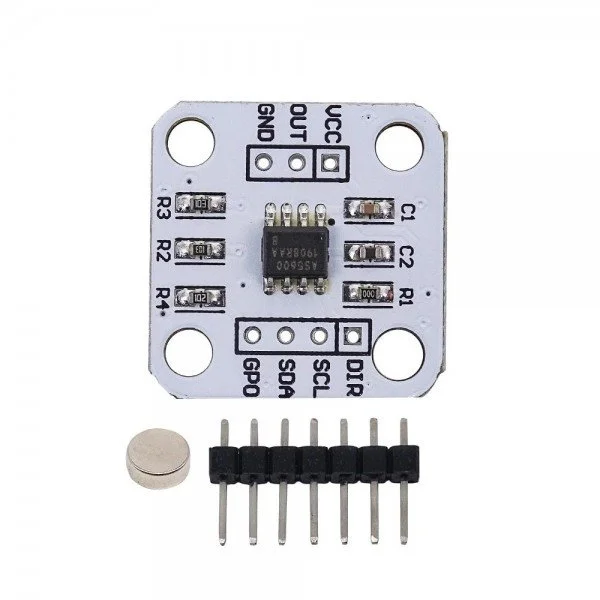
The wind vane is an instrument that measures wind direction. A magnet attached to the rotating wind vane passes over a stationary AS5600 magnetic angle sensor, which detects the rotational direction of the magnet above it.
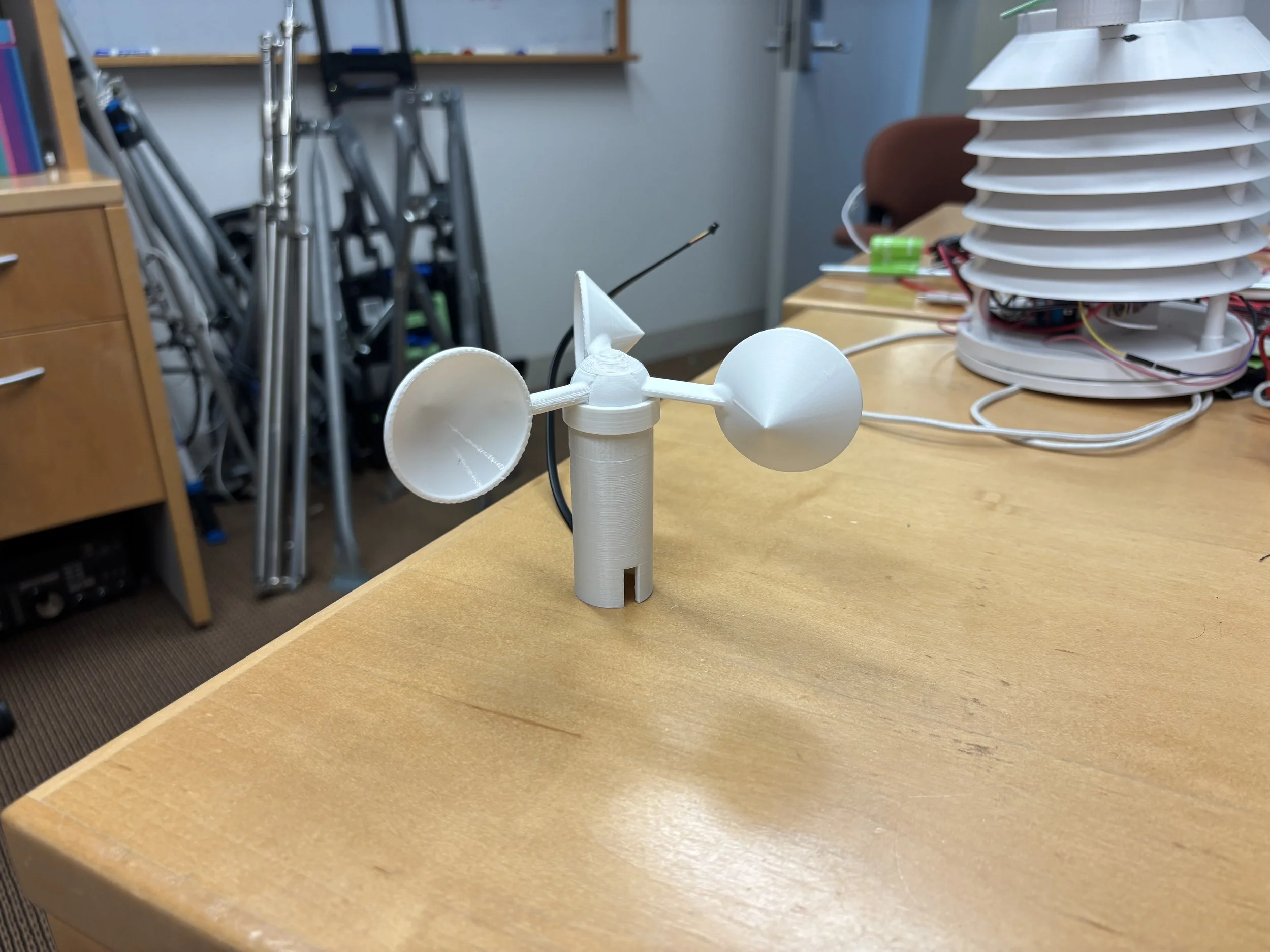
Anemometer
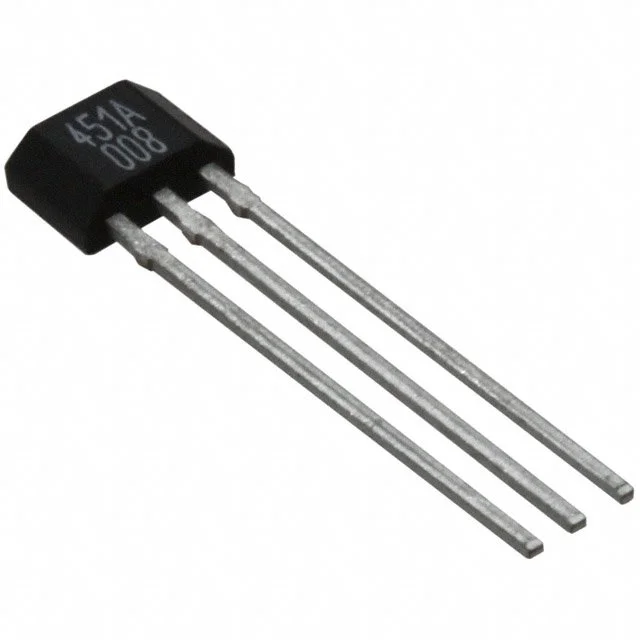
The anemometer is an instrument that measures wind speed. As the wind spins the three cups, the magnet attached to the spinning shaft rotates above the stationary SS451A hall effect sensor. As the shaft spins, the magnet sweeps past a fixed point once per revolution. The output pulses LOW then returns HIGH, producing one clean digital pulse per revolution. The microcontroller converts the frequency of these pulses to an angular velocity.
Antenna
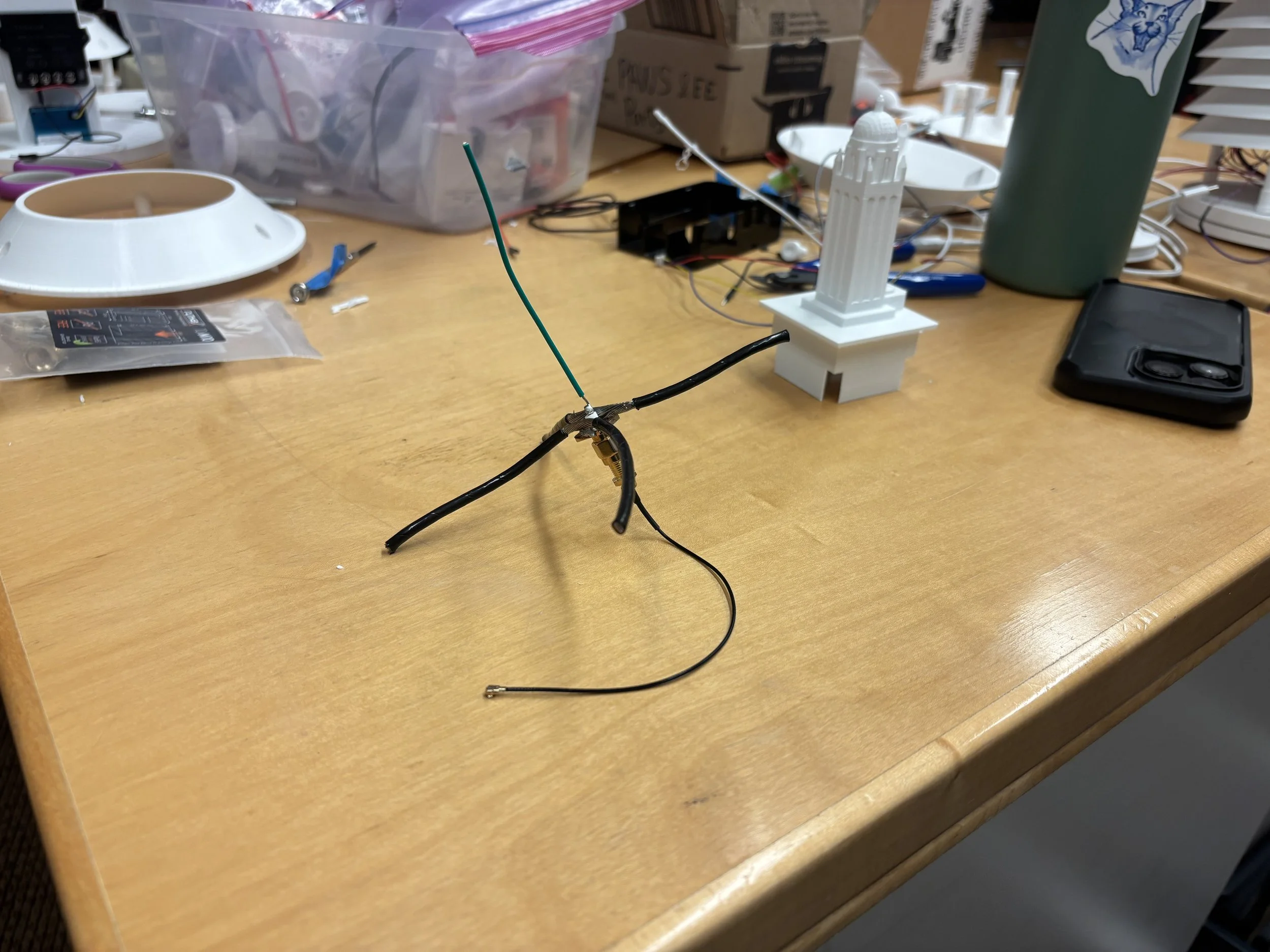
A ground plane antenna is an omnidirectional radio antenna designed to broadcast and receive LoRa radio signals equally in all horizontal directions. It has a vertical rod connected to the radio and sloping horizontal radials to create an elevated artificial ground. The electrical reflection from the artificial ground completes the antenna by reflecting the vertical rod to make a virtual rod going below the ground plane, when observed from above the ground plane. From below the artificial ground, the antenna is electrically not present. This effect isolates the radio from the local earth's absorption, while strengthening effectiveness toward other radios in the network instead. It is covered by a 3D-printed Hoover tower to prevent birds from perching on it.
Wiring Diagram